Showing posts with label rights. Show all posts

Saturday, April 21, 2012

To Support and Defend

Justice Ruth Bader Ginsberg's recent commentary on the Constitution has some people questioning her ability to uphold her oath, and with good reason.  "I would not look to the U.S. Constitution, if I were drafting a constitution in the year 2012." Instead "I might look at the constitution of South Africa."

A quick glance at the South African Constitution highlights some glaring differences from our own Constitution; differences which also highlight Ginsberg's unabashed political leanings.  South Africa guarantees its people food, water, education, housing and healthcare (among other things).  South African politicians are then charted to achieve these goals using their available resources.

The South African Constitution holds to the idea of "positive rights" which the left embraces and which FDR pushed for without our own government.  The key problem of course is that the government itself has nothing which it hasn't first taken from someone else.  In order to guarantee something to someone, you must first be willing to force someone to provide it, without regard for their personal liberty.

Frederic Bastiat succinctly describes the conflict between our Bill of Rights and FDR's "2nd Bill of Rights":

"The second half of your program will destroy the first."

In fact, it is impossible for me to separate the word fraternity from the word voluntary. I cannot possibly understand how fraternity can be legally enforced without liberty being legally destroyed, and thus justice being legally trampled underfoot.

Legal plunder has two roots: One of them, as I have said before, is in human greed; the other is in false philanthropy.
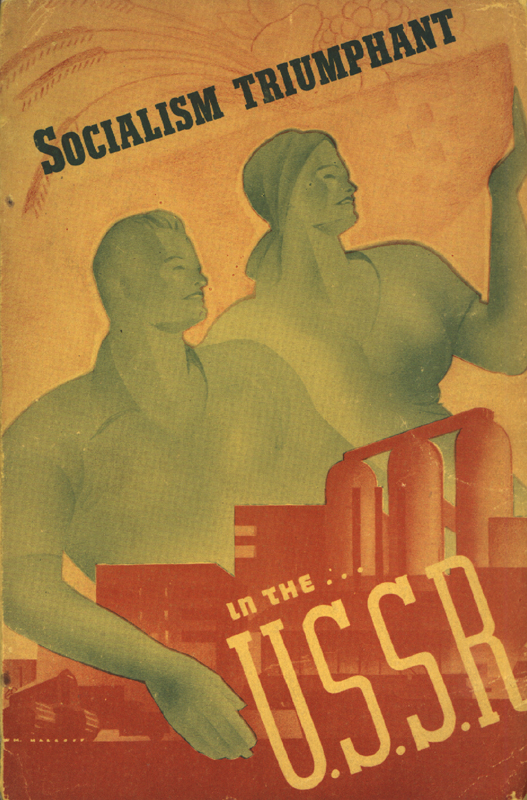
In fact, in order to enforce any sort of positive rights, you must first strip one group of their rights in order to satisfy another group, thereby failing the test of universality and putting to lie the idea of Equality before the law.  In doing so, the left clearly presupposes that some people are more equal than others.

Our Founding Fathers wrote the Constitution with an eye towards limiting government's potential for abuse, and by safeguarding Liberty they ensured an abundance of prosperity to their decedents.  If however we choose to sacrifice Liberty in order to gain material security, we will lose both.

Friday, December 2, 2011

Freedom in the Market

When people say “Capitalism has failed,” mentally replace “Capitalism” with “Freedom” and then consider what they’re saying. After all, capitalist was the label used by Marxists to describe those who believed in the free market. Even “free market” is a misleading term because it conjures up an image of some separate entity acting on its own without our involvement. It would be more accurate to describe it as the freedom to act within the market, i.e.: the principle of free exchange.

Capitalism is just another word for economic freedom.

Of course those calling for the eradication of capitalism aren’t asking to give up their own freedom. They still want the right to negotiate their wages and purchase (or not purchase) products as they see fit. What they really want is the ability to negotiate other peoples wages, force others to agree to their desires, and split the tab for things that they want to have but don’t want to pay for. They’re eager to see shackles placed on others, not realizing they may wind up wearing them in the end.

“He that would make his own liberty secure must guard even his enemy from oppression; for if he violates this duty he establishes a precedent that will reach to himself.” - Thomas Paine

Tuesday, November 29, 2011

Freedom of Consent

We have to remember that the people in government are just like people in the corporate world.  They're ultimately self-interested.  They need to feel the connection between their actions and their consequences to make good decisions.  The difference is that we've entrusted them with coersive power; the authority to use force to compel us to do or not do certain things.  And power once ceded is rarely given back.  We really ought to remember that before inviting them into every aspect of our daily lives:

The problem... is that government is no different from any other organization in society -- it seeks its own aggrandizement. AT&T, General Motors, and Microsoft would love to have world monopolies, controlling all the resources and expanding into every corner of people's lives. But they are limited by competition, the dynamics of the marketplace, and the need to win people's consent in order to market their products.

Government is different. It expands by fiat, through legislation, through taking advantage of emergencies, and by declaring that private entities can't be trusted and government intervention is necessary. Most of all it grows by raising taxes and hiring more and more people so that soon its voter base approaches a majority of the electorate.
http://spectator.org/archives/2011/09/26/the-moochers-credo/

Let's face it.  It's easier to convince a majority of 435 people in Washington D.C. than it is to try to win the consent of millions of consumers exercising their freedom in the market.

Saturday, June 12, 2010

Life, Liberty... and Property

No one ought to harm another in his life, health, liberty, or possessions. - John Locke

The right of property is that which every citizen has of enjoying and of disposing at his discretion of his goods and income, of the fruits of his labor and industry. - French Constitution of 1793

That all men are by nature equally free and independent, and have certain inherent rights... namely, the enjoyment of life and liberty, with the means of acquiring and possessing property, and pursuing and obtaining happiness and safety. - Virginia Declaration of Rights, 1776


That the inhabitants of the English Colonies in North America, by the immutable laws of nature... are entitled to life, liberty, and property, and they have never ceded to any sovereign power whatever, a right to dispose of either without their consent. - DECLARATION OF COLONIAL RIGHTS, FIRST CONTINENTAL CONGRESS, 1774

Property does not exist because there are laws, but laws exist because there is property. - Frédéric Bastiat

The right of man to private property is, therefore, the right to enjoy one's property and to dispose of it at one's discretion (a son gre), without regard to other men, independently of society, the right of self-interest. This individual liberty and its application form the basis of civil society. - Karl Marx, 1843

Government originated in the attempt to find a form of association that defends and protects the person and property of each with the common force of all. - Jean Jacques Rousseau

The recognition of individual rights entails the banishment of physical force from human relationships: basically, rights can be violated only by means of force... The only function of the government, in such a society, is the task of protecting man’s rights.

In a capitalist society, all human relationships are voluntary. Men are free to cooperate or not, to deal with one another or not... i.e., by means of discussion, persuasion, and contractual agreement, by voluntary choice to mutual benefit. The right to agree with others is not a problem in any society; it is the right to disagree that is crucial. - Ayn Rand

Thursday, April 15, 2010

Thomas Paine on Government


[Enjoy these excerpts from the man of whom John Adams said "Without the pen of Paine the sword of Washington would have been wielded in vain."]

Thomas Paine regarding the Nature of Government:

Government even in its best state is but a necessary evil; in its worst state an intolerable one.

When men think of Government, they must necessarily suppose it to possess a knowledge of all the objects and matters upon which its authority is to be exercised.

Laws difficult to be executed cannot be generally good.

Everything which Government can usefully add thereto, has been performed by the common consent of society, without Government.

If we look back to the riots and tumults which at various times have happened in England, we shall find that they did not proceed from the want of a Government, but that Government was itself the generating cause.

Every man wishes to pursue his occupation, and to enjoy the fruits of his labours and the produce of his property in peace and safety, and with the least possible expense. When these things are accomplished, all objectives for which Government ought to be established are answered.

Sunday, April 11, 2010

Democracy, right?

What kind of country do we live in? The long answer is that the United States is a Federal Constitutional Democratic Republic. What does that mean? For starters, we are a democratic nation. The word comes from the Greek meaning “rule by the people.” We the People have the final say in how the country is run. Ultimately, the power of our government is derived from the consent of the governed.

But we do not have a direct say most of the time; we are a republic. We elect representatives to manage the affairs of state. This has a twofold function. First, it allows economic specialization so that only some people should have to deal with the full-time problem of managing public affairs. The rest of us can pursue the real business of going to work every day producing goods, offering services, educating, defending, raising children, growing food, etc. Second, by appointing representatives we attempt to make the state less fickle. Representatives can stand their ground against the opinion of the day, so long as their overall performance is in keeping with the long-term values and attitudes of the People.

The government is also Federal, as so eloquently argued in the Federalist Papers (which every American should read at least once in High School, and then re-read as an adult). Federalism is an idea of a stratified government, where we try to solve issues at the lowest possible level. It allows for a patchwork quilt of laws tailored to fit the varied communities across the country, while at the same time guaranteeing to everyone their God-given Rights (life, liberty, property) and the means to maintain them (the Bill of Rights).

Lastly and importantly, the United States government is Constitutional. It is not “mob rule, where 51 percent of the people may take away the rights of the other 49” as Jefferson described pure Democracy. Instead it's scope is limited to the powers necessary to ensure the Rights of the People and resolve disputes between the States.

Somewhere along the way we lost sight of the original purpose of government. We had established a government to ensure we could all live together without the threat of force depriving us of our life or livelihood. But now there are those who believe we must change government into a tool of force specifically designed to deprive some and benefit others. That is not the United States envisioned by the Founders and it is not the United States I want to leave my children.
Search Engine Submission - AddMe